
Short answer
What GEO (Generative Engine Optimization) is, why it isn't the same as SEO, and how to structure your content so a generative AI can cite you with confidence.
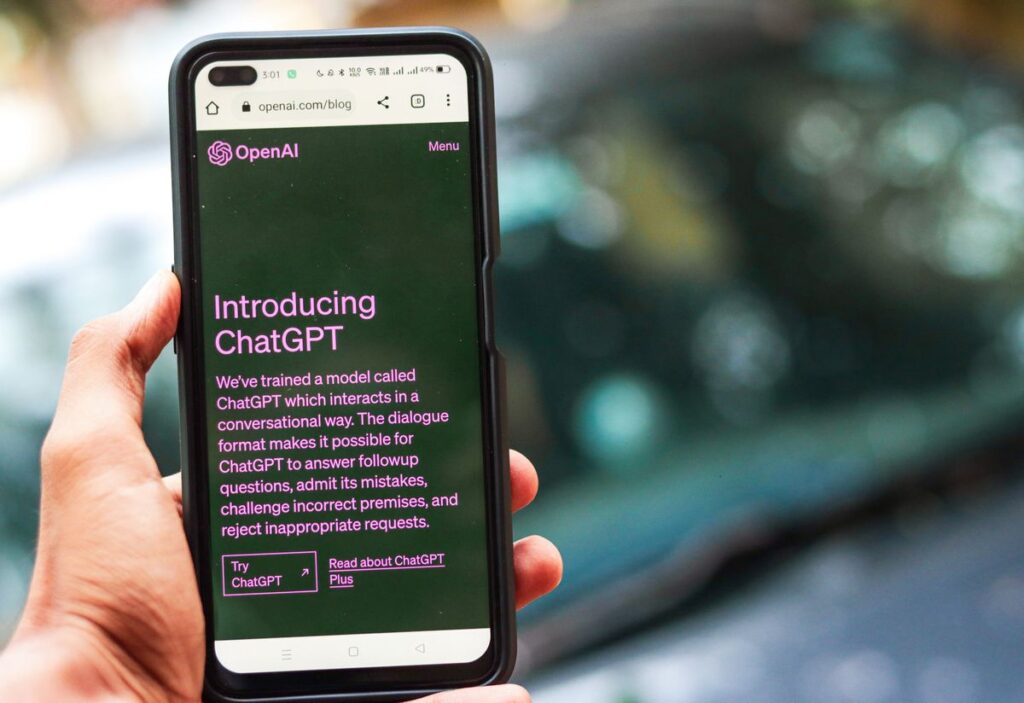
Before writing to you, it’s increasingly likely your next patient or client already asked ChatGPT, Gemini, or some other AI tool a question — not just Google. Recent research already points to a significant share of people using these tools to research health topics before deciding where to get care. The real question isn’t just “do you show up on Google?” anymore — it’s “does the AI know you exist, and can it describe what you offer well?”
What GEO is (and why it isn’t the same as SEO)
Traditional SEO optimizes so a search engine like Google shows you in a list of links the person still has to open and read. GEO — Generative Engine Optimization — optimizes so a generative AI can read, understand, and cite your content directly inside the answer it gives the user, without that person necessarily visiting your site first.
They’re related strategies, but not identical ones. A site can be reasonably well-ranked on Google and still be practically invisible to a generative AI — because the content isn’t structured in a way the AI can confidently extract as a clear answer to a specific question.
Why this matters especially for a medical or multi-location business
The questions someone asks an AI before choosing where to get care tend to be exactly the kind of question a health business can answer with real authority: “what should I expect at my first appointment with a [specialty]?”, “how do I choose between these two clinics?”, “what should I ask my doctor about [treatment]?” If your digital presence doesn’t give the AI clear material to cite, the answer that person gets simply won’t mention you — no matter how good you actually are in practice.
How to build content an AI can actually cite
Answer the question directly, in the first few lines
A generative AI favors content that answers a question directly and verifiably, not content that meanders before getting to the point. If an article opens with three paragraphs of context before saying anything concrete, it’s far less citable than one that answers in the first line or two.
Structure it as real questions and answers
FAQ sections are, literally, one of AI tools’ favorite formats — because they already come in the question-answer format these tools need in order to cite something. This isn’t about inventing generic questions: it’s about answering the real doubts a patient or client would have before writing to you, with the same honesty you’d use explaining it to them in person.
Be specific, not generic
“We offer quality care” isn’t citable — it doesn’t answer anything concrete. “The first month is Foundation Setup: a conversion site, unifying your Google Business Profile, and your Brand Vision Manual” is, because it’s a specific, verifiable claim. The more specific and verifiable your content, the more confidently an AI can use it.
Consistency across everything that exists about your brand
A generative AI doesn’t just read your site — it cross-references your Google Business Profile, your social channels, directories, and any public mention of your business. If that information is inconsistent (the same NAP problem that affects traditional local SEO), the AI has less confidence to cite you safely, and it prefers a source that’s internally coherent instead.
This doesn’t replace traditional SEO — it complements it
GEO isn’t a trend that makes everything else obsolete. A well-structured Google Business Profile, real reviews, and consistent NAP are still the foundation — in fact, they’re part of the same trust signals a generative AI evaluates too. GEO is the additional layer that makes sure that, when the conversation moves from a search engine to an AI assistant, your business is still part of the answer.
How we apply this on this very site
This isn’t a theoretical recommendation — it’s exactly how this site is built: real, specific frequently asked questions on our FAQ page, with the technical markup (FAQPage schema) that helps search engines and AI read it with confidence, and content written to answer directly instead of meandering.
Is your content ready for an AI to cite it?
It’s exactly the kind of question the free Diagnostic exists to answer — no generic quote involved, a 15-minute conversation about how ready your digital presence is for the moment when search stops being just a search engine.